


-
OVERVIEW
Modular, field-ready air pollution monitoring
Air compliance monitoring doesn’t fit a one-size-fits-all template. Project requirements shift. Regulations tighten. Field conditions vary. Kunak Smart Cartridges solve this with a patented modular system where each cartridge is a complete measurement unit: sensor, embedded calibration data, and intelligence. Swap cartridges in 2 minutes with no factory visits or downtime. Deploy exactly what you need, when you need it.
How GasPlug technology works
The patented GasPlug system makes this simplicity possible. Each cartridge locks into place with a quick mechanical connection. When you insert it, the system reads its embedded data including sensor type, factory calibration, age, and cartridge history. The platform auto-configures and starts measuring almost immediately.
Cartridges are individually calibrated and validated against traceable reference standards in the lab before shipping. They arrive with a calibration certificate. That accuracy is built in, persistent, and survives cartridge swaps. No recalibration at site unless you choose to refine the reading against a reference station or certified gas standard.
Data quality and maintenance
Kunak’s embedded algorithm corrects environmental interference in real-time, compensating for temperature, humidity, and pressure effects without external reference data. This delivers clean, comparable measurements across sites and seasons.
Maintaining accuracy over time is straightforward. Calibration uses a reference standard (co-location or certified gas) to determine exact uncertainty. Correction adjusts for drift using historical data alone. Both can be done remotely via Kunak AIR Cloud. Recommended schedule is every three months, after relocation, or following seasonal changes. See the catalogue for detailed maintenance options.
Available parameters
Learn more about the pollutants and particulates your project requires. All cartridges work in the same hardware platform.
Gases
CO | NO | NO2 | O3 | SO2 | H2S | CO2 | CH4 | VOC | NMHC | NH3 | HCl | HCN | HF | Cl2/ClO2 | O2
Particulates
PM | UFP
-
CARBON MONOXIDE (CO)
For real-time carbon monoxide (CO) measurement. The cartridge has a built-in electrochemical sensor allowing measurements from from very low concentrations (ppb) up to several ppm. The cartridge comes in two measurement ranges for different applications:
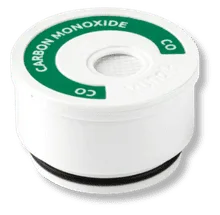
- Type A measuring most common concentrations range to 12,000 ppb.
- Type B, a higher range version that can measure up to 500 ppm, with reduced accuracy at low concentrations.
Why it matters
CO is odourless and colourless, making it a silent hazard in industrial settings, vehicle exhaust zones, emergency shelters, and any confined space with combustion appliances. Exposure over time causes serious health impacts and fatalities. Continuous monitoring catches dangerous accumulation before it becomes critical.
Technical specifications
Type A Type B Measurement Range 0 – 12,000 ppb 0 – 500 ppm Limit of Detection (LOD) 10 ppb 0.02 ppm Response Time < 30 sec < 180 sec Operating Temperature Range -30 to 50 ºC Operating RH Range 0 to 99 %RH Operating Life > 24 months For more information and full specifications view CO datasheet and co-location field study.
-
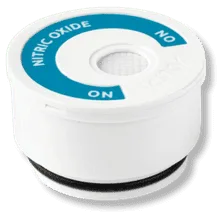
NITRIC OXIDE (NO)
For real-time nitric oxide (NO) concentration in ambient air. The cartridge has a built-in electrochemical sensor designed to measure very low ppb concentrations in ambient air through to several ppm near pollution sources.
Why it matters
NO is a colourless toxic gas emitted from combustion of coal, oil, diesel, and natural gas, plus vehicle exhausts and biomass burning. When it reacts with sunlight and other chemicals, it forms smog and acid rain. High inhalation levels cause respiratory problems, particularly in asthmatics and vulnerable groups, and affect cardiovascular and immune systems.
Technical specifications
Measurement Range 0-5,000 ppb Limit of Detection (LOD) 2 ppb Response Time < 30 sec Operating Temperature Range -30 to 45ºC Operating RH Range 0 to 99 %RH Operating Life > 24 months For more information and full specifications view NO datasheet and co-location field study.
-
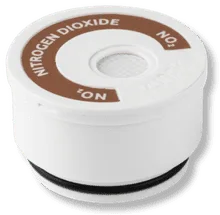
NITROGEN DIOXIDE (NO2)
For real-time nitrogen dioxide (NO2) concentration in air. The cartridge features an electrochemical sensor with an embedded ozone (O3) filter that eliminates interference produced ozone. This makes the cartridge ideal for accurate ambient air measurement from clean environments to highly polluted urban and industrial zones.
Why it matters
NO2 is a criteria pollutant that contributes to photochemical smog formation with major impact on human health. Elevated levels inflame lung lining and reduce immunity to respiratory infections, resulting in wheezing, coughing, increased colds, flu, bronchitis, and more frequent and intense asthma attacks.
Regulatory context: NO2 is a regulated ambient air pollutant under air quality standards in Australia and New Zealand, where compliance monitoring is commonly required.
Technical specifications
Measurement Range 0-5,000 ppb Limit of Detection (LOD) 2 ppb Response Time < 60 sec Operating Temperature Range -30 to 45ºC Operating RH Range 0 to 99 %RH Operating Life > 24 months For more information and full specifications view NO2 datasheet and co-location field study.
-
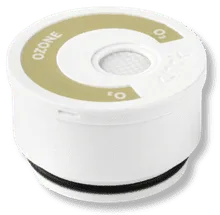
OZONE (O3)
For real-time ozone (O3) concentration in air. The ozone cartridge has a built-in electrochemical sensor responsive to NO2 and O3 concentrations. Hence, in order to measure accurately the O3 concentration, it is required to install in the same device the NO2 cartridge.
The Kunak algorithm considers both concentrations allowing for accurate O3 measurements with, with no NO2 influence, even at high temperatures which are related to higher O3 concentration due to the solar radiation.
Why it matters
O3 at ground level is a reactive gas and important greenhouse gas that harms human and ecosystem health. It is the major component of urban smog. Elevated ozone concentrations reduce lung function and increase respiratory disease risk across all age groups. Monitoring is essential for health protection and air quality compliance, particularly in areas with high solar radiation where formation accelerates.
Regulatory context: Ozone is a regulated ambient air pollutant under air quality standards in Australia and New Zealand, where compliance monitoring is commonly required.
Technical specifications
Measurement Range 0 – 2,000 ppb Limit of Detection (LOD) 3 ppb Response Time < 70 sec Operating Temperature Range -30 to 45ºC Operating RH Range 10 to 99 %RH Operating Life > 24 months For more information and full specifications view O3 datasheet and co-location field study.
-
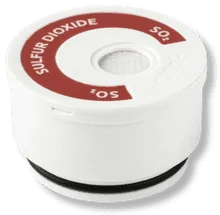
SULPHUR DIOXIDE (SO2)
For monitoring real-time sulphur dioxide (SO2) concentration in air. The cartridge contains an electrochemical sensor which presents high cross-sensitivities with O3, NO2 and CO. When used together with the NO2, O3 and CO cartridges, the Kunak algorithm can correct these cross-sensitivities, improving the accuracy of the measurements.
It is not recommended for applications requiring accurate SO2 measurements at very low concentrations (<20 ppb).
Why it matters
SO2 is an invisible gas with a sharp smell produced by combustion of any substance containing sulphur, particularly coal and fossil fuel burning. It is a respiratory tract and eye irritant that affects humans rapidly (within 10 to 15 minutes of exposure). Long-term exposure damages lung defences and aggravates existing cardiovascular disease. SO2 also contributes to acid rain and ecosystem damage when oxidised to sulphuric acid.
Regulatory context: Sulphur dioxide is a regulated ambient air pollutant under air quality standards in Australia and New Zealand, where compliance monitoring is commonly required.
Technical specifications
Measurement Range 0 – 10,000 ppb Limit of Detection (LOD) 3 ppb Response Time < 60 sec Operating Temperature Range -30 to 40 ºC Operating RH Range 0 to 99 %RH Operating Life > 24 months For more information and full specifications view SO2 datasheet and co-location field study.
-
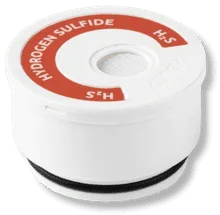
HYDROGEN SULPHIDE (H2S)
For real-time hydrogen sulphide (H2S) monitoring. The cartridge has a built-in electrochemical sensor that is very sensitive to its target pollutant allowing it to detect small changes in H2S concentration. This cartridge also responds to methyl mercaptan (CH4S) and other total reduced sulphur compounds (TRS). To cover different applications, there are 2 measurement ranges:
- Type A: detects low ppb concentrations in real environments. Although the Kunak algorithm corrects the temperature variations well, it is not recommended to use this cartridge to measure levels below 15 ppb.
- Type B: a higher range version that can measure up to 20 ppm, not so precise at low concentrations.
Why it matters
H2S is a colourless, toxic gas with a characteristic rotten egg odour. It is produced in wastewater treatment plants, mines, and landfills, and also occurs from industrial processes. Even brief exposures to high concentrations cause acute effects. Lower chronic exposures cause sensory irritation, respiratory problems, and neurological effects. Continuous monitoring protects worker safety and community health near potential sources.
Regulatory context: Hydrogen sulphide is a regulated workplace contaminant in Australia and New Zealand, where exposure monitoring is commonly required in sectors such as mining, oil and gas, and wastewater management.
Technical specifications
Type A Type B Measurement Range 0 – 2,000 ppb 0 – 20 ppm Limit of Detection (LOD) 2 ppb 0.01 ppm Response Time < 60 sec Operating Temperature Range -30 to 50 ºC Operating RH Range 0 to 99 %RH Operating Life > 24 months For more information and full specifications view H2S datasheet and co-location field study.
-
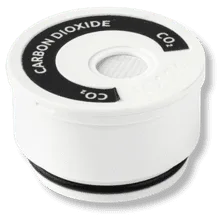
CARBON DIOXIDE (CO2)
For real-time carbon dioxide (CO2) monitoring. The cartridge has a built-in non-dispersive infrared sensor (NDIR) ideal for measuring typical atmospheric concentrations for climate change applications (300-400 ppm) as well as high concentrations from industrial processes (until 5,000 ppm).
Why it matters
Carbon dioxide (CO2) is the fourth most abundant gas in the Earth’s atmosphere being the main Greenhouse gas. It is an odourless, colourless, and non-toxic gas although its emission is an environmental global problem, being the main gas pollutant contributing to climate change.
Technical specifications
Measurement Range 0-5,000 ppm Limit of Detection (LOD) – Response Time < 30 sec Operating Temperature Range -20 to 50ºC Operating RH Range 0 to 90 %RH Operating Life > 4 years For more information and full specifications view CO2 datasheet.
-
METHANE (CH4)
For measuring real-time methane (CH4) concentration in air. Various options are available for methane monitoring, each designed for different applications and measurement ranges:
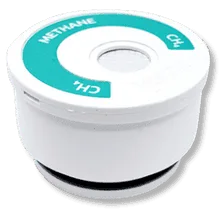
- Cartridge (Type C): a state-of-the-art sensor designed for applications requiring high-sensitivity CH4 monitoring. This sensor provides accurate measurements from low concentrations (2 ppm) to 300 ppm. Its compact design, cost-effectiveness and cutting-edge performance make it an ideal solution for continuous monitoring and leak detection. This sensor is sensitive to H2S concentrations (> 100 ppb); therefore, it is recommended to install the H2S cartridge in the same device in order to correct for this interference and ensure accurate CH4 measurements.
- Methane Laser Module (Type D): leveraging Tunable Diode Laser Absorption Spectroscopy (TDLAS) technology, this module (320 x 150 x 120 mm) provides exceptional accuracy for methane measurements, with a range spanning from sub-ppm levels to 1,000 ppm. Its unique selectivity for methane, free from interference by other gases, water vapor, or dust particles, makes it an advanced solution for industries demanding the highest accuracy.
Why it matters
Methane is a potent greenhouse gas with global warming potential far exceeding CO2. Sources include landfills, wastewater treatment, oil and gas operations, agriculture, and mining. It is colourless, odourless and insoluble in water.
Regulatory context: Methane emissions monitoring is increasingly required under mandatory climate reporting frameworks in Australia and New Zealand, where large organisations must disclose greenhouse gas emissions.
Technical specifications
Type C Type D Measurement Range 2 – 300 ppm 0 – 1,000 ppm Limit of Detection (LOD) < 0.05 ppm Response Time < 120 sec < 30 sec Operating Temperature Range -30 to 60ºC Operating RH Range 10 to 99 %RH 0 a 98 %RH Operating Life > 24 months > 5 years (10 years from manufacturer) For more information and full specifications view CH4 datasheet.
-
VOLATILE ORGANIC COMPOUNDS (VOC)
For measuring real-time volatile organic compound (VOC) concentration in air. The cartridge contains a built-in photo-ionisation detector (PID) sensor equipped with a 10.6 eV light energy source to accurately measure hundreds of VOCs commonly found in indoor and outdoor environments. Its cutting-edge design avoids any undesirable humidity effect, giving 10,000 hours of continuous operation. To cover different applications, there are 2 measurement ranges:
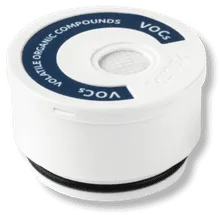
- Type A: detects low ppb concentrations in outdoor ambient environments. Kunak algorithm corrects the temperature, humidity and pressure variations allowing accurate measurements from very low concentrations (<5 ppb) up to >3,000 ppb, with very low variability between sensors.
- Type B: higher range version that can measure up to 40 ppm. It is not recommended to use this cartridge to detect levels below 1 ppm, since the accuracy of the sensor at low concentrations decreases.
Why it matters
VOCs are emitted from paints, solvents, adhesives, printing operations, refuelling, chemical manufacturing, and other industrial processes. Many VOCs are toxic at elevated concentrations, causing respiratory irritation, headaches, and neurological effects. Some are known carcinogens.
Technical specifications
Type A Type B Measurement Range 0 – 3,000 ppb 0 – 40 ppm Limit of detection (LOD) 1 ppb 0.01 ppm Response Time < 12 sec < 10 sec Operating Temperature Range -40 to 60ºC Operating RH Range 0 to 99 %RH Operating Life 10,000 hours For more information and full specifications view VOC datasheet.
-
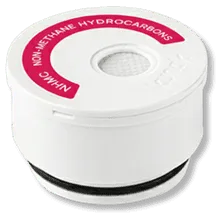
NON-METHANE HYDROCARBONS (NMHC)
For measuring real-time non-methane hydrocarbon (NMHC) concentration in air. The NMHC cartridge incorporates a new state-of-the-art sensor designed for applications requiring reliable and affordable monitoring of non-methane hydrocarbons.
Why it matters
NMHC are important ozone precursor pollutants in urban and industrial air. They contribute to smog formation and have direct toxic effects at high concentrations. NMHC measurement is essential for understanding ozone formation potential in an air mass and for evaluating effectiveness of volatile organic compound controls. Environmental monitoring networks use NMHC to track emission sources and assess air quality trends. Industrial facilities use NMHC monitoring to verify control system performance and demonstrate regulatory compliance.
Technical specifications
Measurement Range 0-5,000 ppb Limit of Detection (LOD) 5 ppb Response Time < 120 sec Operating Temperature Range -30 to 60ºC Operating RH Range 10 to 99 %RH Operating Life > 2 years For more information and full specifications view NMHC datasheet.
-
AMMONIA (NH3)
For measuring real-time ammonia (NH3) concentration in air. The cartridges contain electrochemical sensors that accurately measure NH3 in different ranges. There are 3 types of NH3 cartridges for different applications:
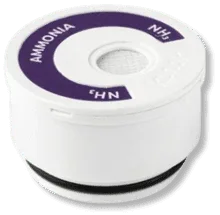
- Type A: is used to detect from low concentrations up to 50 ppm with a typical noise of less than 0.3 ppm when the ambient temperature is less than 25 ºC. This sensor is responsive to H2S when present at high concentrations (ppm level), which is relevant since the two substances can coexist in the same environment. Therefore, to accurately measure NH3, it is necessary to have the H2S cartridge installed in the same device (in case of high H2S concentrations, ppm level). Thus, thanks to Kunak’s algorithm which considers both concentrations, it is possible to correct the interference of H2S and obtain precise measurements of NH3.
- Type B: a higher range version that is used to carry out continuous measurements of concentrations up to 1,500 ppm, not so precise at low concentrations. Type A and Type B sensors are specially conceived for industrial leak detection and not for environments with continuous background NH3 concentrations (i.e. livestock).
Why it matters
Ammonia is a colourless gas with a pungent odour that can be detected by humans at 0.4-1 ppm, being the exposure limit 50 ppm. It is a respiratory irritant causing coughing, shortness of breath, and airway inflammation. Chronic exposure exacerbates asthma. Intensive agricultural regions rely on NH3 monitoring to assess environmental impact and demonstrate compliance with emission controls. Industrial facilities and waste treatment plants use NH3 measurement for real-time operational control and safety.
Technical specifications
Type A Type B Measurement Range 0 – 50 ppm 0 – 1,500 ppm Limit of Detection (LOD) 0.02 ppm 0.15 ppm Response Time < 45 sec Operating Temperature Range -10 to 50ºC -20 to 43ºC Operating RH Range 0 to 99 %RH Operating Life > 24 months For more information and full specifications view NH3 datasheet.
-
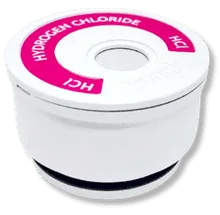
HYDROGEN CHLORIDE (HCl)
For measuring real-time hydrogen chloride (HCl) concentration in air. The cartridge has a built-in electrochemical sensor capable of monitoring low concentrations (< 1 ppm) as well as high concentrations of HCl, up to 20 ppm, and an accuracy of ±0.1 ppm.
Why it matters
Hydrogen chloride (HCl) is a colourless to slightly yellow gas with a pungent odour. Upon contact with air, it forms dense, corrosive white vapours. It is a corrosive, irritating gas causing respiratory tract and eye damage at even modest exposures. High concentrations cause severe respiratory distress and potential respiratory failure.
Regulatory context: HCl monitoring is critical for industrial air quality and emissions compliance, particularly at chemical facilities and waste treatment sites in Australia and New Zealand.
Technical specifications
Measurement Range 0 – 20 ppm Limit of Detection (LOD) 0.01 ppm Response Time < 45 sec Operating Temperature Range -20 to 50ºC Operating RH Range 0 to 99 %RH Operating Life > 24 months For more information and full specifications view HCI datasheet.
-
HYDROGEN CYANIDE (HCN)
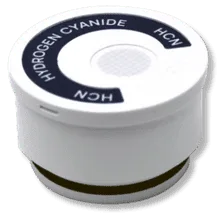
For measuring real-time hydrogen cyanide (HCN) concentration in air. The cartridge contains an electrochemical sensor capable of detecting both low concentrations of HCN (below 1 ppm) and higher levels, up to 50 ppm, with an accuracy of ±0.10 ppm. However, the HCN sensor exhibits significant cross-sensitivity to SO2 and NO2.
Why it matters
Hydrogen cyanide is a colorless, highly volatile, and flammable liquid that evaporates quickly. It occurs both naturally and as a result of industrial activities. Even brief exposures to moderate concentrations cause acute toxicity affecting the nervous system and cardiovascular function. Long-term exposure to lower levels causes neurological and systemic health effects. HCN monitoring is essential for safety at chemical manufacturing facilities, waste thermal treatment plants, and fire-prone environments. Industrial hygiene depends on accurate real-time HCN measurement to protect worker safety.
Regulatory context: Hydrogen cyanide is subject to strict occupational exposure limits in Australia and New Zealand, with monitoring commonly required in industrial settings.
Technical specifications
Measurement Range 0 – 50 ppm Limit of Detection (LOD) 0.02 ppm Response Time < 160 sec Operating Temperature Range -20 to 45ºC Operating RH Range 0 to 99 %RH Operating Life > 24 months For more information and full specifications view HCN datasheet.
-
HYDROGEN FLUORIDE (HF)
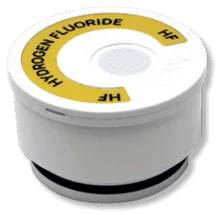
For measuring real-time hydrogen fluoride (HF) concentration in air. The cartridge features an integrated electrochemical sensor capable of detecting both low concentrations of HCN (below 1 ppm) and higher levels, up to 50 ppm, with an accuracy of ±0.10 ppm. However, the HCN sensor exhibits significant cross-sensitivity to SO2 and NO2.
Why it matters
Hydrogen fluoride is an extremely corrosive and highly toxic gas produced by thermal treatment of fluorine-containing minerals, chemical manufacturing, and certain industrial processes. HCN is extremely toxic due to its interference with the body’s ability to use oxygen. Acute exposure can lead to headache, dizziness, nausea, confusion, rapid breathing, and loss of consciousness. High concentrations can cause seizures, respiratory failure, cardiac arrest, and death within minutes.
Regulatory context: Hydrogen fluoride is subject to very strict occupational exposure limits and emergency response protocols in Australia and New Zealand due to its severe acute toxicity.
Technical specifications
Measurement Range 0 – 50 ppm Limit of Detection (LOD) 0.02 ppm Response Time < 160 sec Operating Temperature Range -20 to 45ºC Operating RH Range 0 to 99 %RH Operating Life > 24 months For more information and full specifications view HF datasheet.
-
CHLORINE AND CHLORINE DIOXIDE (Cl2/ClO2)
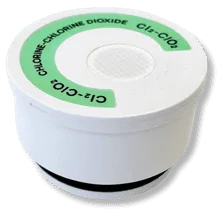
For measuring real-time chlorine (Cl2) and chlorine dioxide (ClO2) concentration in air. The cartridge has a built-in electrochemical sensor capable of measuring both Cl2 and ClO2 pollutants, from low concentrations (ppb level) to high concentrations. The cartridge is calibrated against Cl2, while the response to ClO2 is higher than 70%.
Why it matters
Chlorine is a greenish-yellow gas with a strong, irritating odour. Chlorine dioxide is a reddish-yellow gas with a pungent chlorine-like odour. It is a strong oxidising agent. Both are respiratory irritants causing coughing, shortness of breath, and airway inflammation at elevated concentrations. Acute high-level exposure causes severe respiratory distress and potential fatality. Real-time measurement enables rapid response to accidental releases.
Regulatory context: Chlorine is regulated for both occupational and community exposure in Australia and New Zealand, with water treatment facilities subject to ongoing compliance requirements.
Technical specifications
Measurement Range 0-20 ppm Limit of Detection (LOD) 0.01 ppm Response Time < 60 sec Operating Temperature Range -20 to 50ºC Operating RH Range 0 to 99 %RH Operating Life > 24 months For more information and full specifications view Cl2/ClO2 datasheet.
-
OXYGEN (O2)
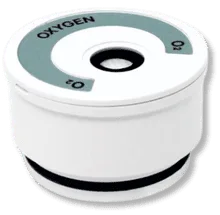
For measuring real-time oxygen (O2) concentration in air. The cartridge contains Electrochemical sensor designed to measure typical concentrations in ambient air—around 20.9%—as well as small deviations caused by industrial processes, gas displacement, or other atmospheric changes.
Why it matters
O2 is an essential gas that makes up approximately 20.9% of the volume of atmospheric air at sea level. O2 monitoring is essential as it provides context for combustion efficiency and fire risk assessment. From an environmental perspective, monitoring oxygen helps assess air quality and the dynamics of atmospheric exchange.
Technical specifications
Measurement Range 0 – 30 % Limit of Detection (LOD) – Response Time < 10 sec Operating Temperature Range -30 to 50ºC Operating RH Range 0 to 99 %RH (short periods) Operating Life > 4 years For more information and full specifications view O2 datasheet.
-
PARTICULATE MATTER (PM)
For measuring real-time particulate matter (PM) concentration in air across multiple size fractions. The particle sensor consists of sensors based on laser scattering technology. To cover different applications, two particle sensors are available:
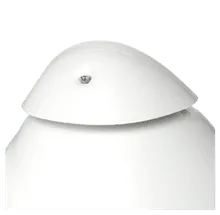
- Type A (specific for Kunak AIR Pro stations): an OPC (Optical Particle Counter) capable of measuring particles from 0.3 μm up to 40 μm thanks to 24 bin channels. The PM1, PM2.5, PM4, PM10, Total Suspended Particles (TSP) and Total Particle Counter (TPC) are calculated assuming a particle density profile. Field co-location studies have shown similar field performance as equivalence instruments based on the same technology, even in monitoring coarse particles (Certified Product for Indicative Ambient Particulate Monitors).
- Type B (specific for Kunak AIR Lite stations): sensor with a range of measurement from 0.3 μm up to 10 μm. The sensor monitors accurately PM1 and PM2.5 concentration, while the expected error for PM10 is higher in the presence of coarse particles.
Why it matters
Particulate matter is one of the most critical air pollutants for human health. Particle size determines where in the respiratory tract damage occurs. Long-term exposure to elevated PM causes premature mortality in patients with existing lung or heart disease, triggers heart attacks, aggravates asthma, reduces lung function, and causes respiratory irritation and difficulty breathing. Community and occupational monitoring protects public health and supports regulatory compliance.
Regulatory context: PM₂.₅ and PM₁₀ are regulated particulate pollutants under air quality standards in Australia and New Zealand, with monitoring widely required. PM₂.₅ is increasingly the focus of health-based regulation.
Technical specifications
Type A (only for Kunak AIR Pro) Type B (only for Kunak AIR Lite) Measurement Range 0 – 1,000 μg/m3 (PM1)
0 – 2,000 μg/m3 (PM2.5)
0 – 2,000 μg/m3 (PM4)
0 – 10,000 μg/m3(PM10)
0 – 15,000 μg/m3 (TSP)
0 – 8,000 counts/cm3 (TPC)0 – 1,000 μg/m3 Limit of Detection (LOD) 0.5 μg/m3 (PM1)
0 – 0.5 μg/m3 (PM2.5)
0 – 0.5 μg/m3 (PM4)
0 – 1 μg/m3 (PM10)
0 – 6 μg/m3 (TSP)0.5 μg/m3 (PM1)
0.5 μg/m3 (PM2.5)
0.5 μg/m3 (PM10)Response Time < 10 sec Operating Temperature Range -20 to 50 ºC
-40 to 50 ºC with heater-10 to 60 ºC Operating RH Range 0 to 99 %RH Operating Life > 24 months For more information and full specifications view PM datasheet and co-location field study.
-
ULTRAFINE PARTICLES (UFP)
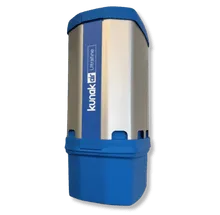
For measuring real-time ultrafine particle (UFP) count and size distribution in air. The sensor employs advanced technology based on electrical charging and electrostatic detection to measure, in real time, the concentration and size of ultrafine particles in the air. It incorporates a system that ionises the sampled particles and, using an electrostatic trap, removes excess ions, enabling particle size determination through a dynamic process.
Why it matters
Ultrafine particles (<0.1 μm) are the smallest and potentially most hazardous particulates. Their small size allows then to penetrate deep into the lungs and reach the bloodstream. Their size and composition make them highly reactive, capable of causing inflammation, oxidative stress and damage to vital organs.
Technical specifications
Response Time 0.2 s Operating Temperature Range -20 to 50ºC Operating RH Range 0 to 99 %HR Operating Life 4 years For more information and full specifications view UFP datasheet.
Kunak Smart Cartridges

Air quality monitoring shouldn’t force you to choose your parameters upfront. Kunak Smart Cartridges let you swap measurement sensors in minutes, with no downtime or factory visits. Deploy exactly what your project needs, when you need it. All cartridges use the same hardware platform and come factory-calibrated with full traceability.
Contact us to discuss your air quality monitoring requirements


