Physical retail is not going anywhere.
Despite years of headlines about the rise of e-commerce, brick-and-mortar stores are projected to hold 76% of total retail sales. The format is resilient. The challenge is not survival, it is performance. And that is where a real gap exists.
E-commerce operators know exactly who visited their site, what they looked at, how long they stayed, what they almost bought, and what finally converted them. That data feeds every decision, from product placement to promotional timing to staffing. Physical retailers, by contrast, are often working from weekly sales reports, manager observations, and intuition. The store is full of behaviour. Very little of it is being captured.
Beyond the door counter
Most retailers with any foot traffic measurement in place are using basic entry counters. These tell you how many people came in. That is useful, but it is a fraction of what is now measurable.
Modern people counting technology captures a much richer picture. Depending on the system, you can measure:
- Dwell time: how long shoppers spend in specific areas of the store
- Zone traffic: which sections are drawing the most movement and which are being bypassed
- Peak period mapping: not just when the store is busy, but where it is busy and when
- Shopper profiles: group types (families, couples, individuals), adult/child ratios, and gender distribution
- Conversion context: foot traffic relative to transaction data, giving you a true conversion rate rather than a sales-only view
This is the kind of data e-commerce has always had. It is now accessible for physical retail. 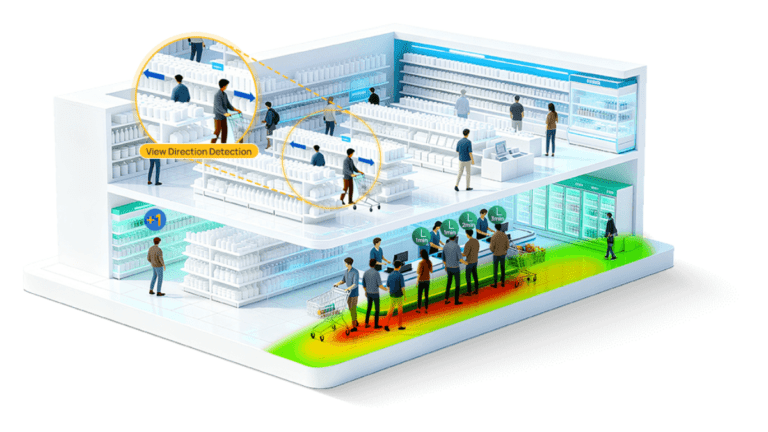
What this actually changes operationally
The value is not in the data itself, it is in the decisions it supports. Here are four areas where retailers are seeing a direct operational impact:
Staff scheduling. Knowing peak periods by zone, not just by hour, means you can put staff where they are needed rather than spreading them evenly across a shift. During high-traffic windows in key product areas, service levels improve. During quieter periods, labour is not wasted.
Store layout. Heatmap data shows you where shoppers naturally move and where they stop. If a high-margin product area is consistently bypassed, that is a layout problem, and one that is now visible and fixable. Promotional placement decisions become evidence-based rather than instinct-based.
Queue and service management. Zone-level traffic data flags where congestion builds before it becomes a customer experience problem. For multi-site operators, this becomes a benchmarking tool, comparing dwell patterns and service bottlenecks across locations.
Campaign and promotional evaluation. If a window display or in-store promotion is working, foot traffic into that zone should reflect it. People counting gives you a way to measure whether a campaign is actually driving in-store engagement, not just sales that may have happened anyway. 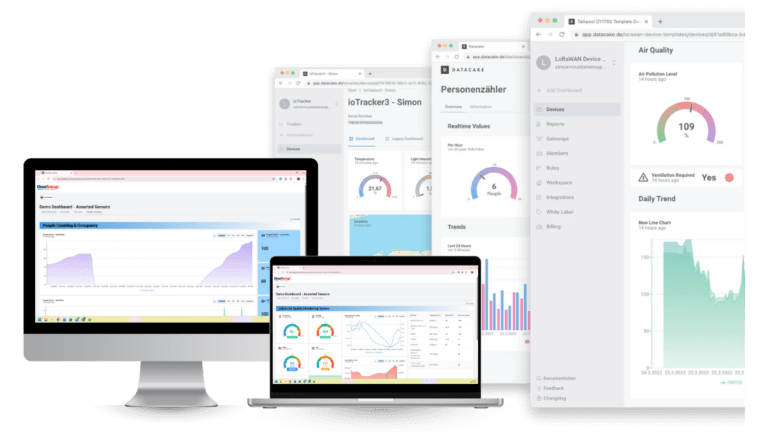
Where OneTemp comes in
Getting value from people counting data depends on two things: the right hardware and a platform that brings it all together. OneTemp covers both.
OneTemp IoT Cloud is an end-to-end platform built around the complete sensor data workflow: connect, collect, visualise, automate, and manage. Paired with the Milesight people counting sensor range, it is a complete, scalable solution with no gap between the hardware and the platform. One team, one relationship, and one place to call if something is not working.
For retailers with multiple sites or a growing sensor network, that matters. Customers with more complex requirements often hit a ceiling with available software. OneTemp IoT Cloud is built to scale with you, with built-in redundancy, connectivity monitoring, and remote support that does not require a technician on site.
If you would rather not configure dashboards and alerting rules yourself, the OneTemp team will do it for you. The platform is set up to reflect your environment from day one.
If you are at the stage of understanding what is possible and whether it is right for your operation, that is exactly the conversation we are set up to have.