Food and Beverage operations generate significant volumes of wastewater, which must be managed carefully to meet compliance requirements, reduce operational costs, and support sustainability goals. Smarter wastewater monitoring, powered by smart sensors and IIoT-enabled solutions, gives operators and integrators real-time insights to optimise processes, detect issues early, and stay compliant. Here are the 5 things you need to know:
-
Why is wastewater monitoring important for Food & Beverage operations? >>
-
What measurements and technologies are essential? >>
-
How does monitoring help with compliance? >>
-
What operational benefits can smart monitoring provide? >>
-
How can OneTemp’s Wastewater Monitoring & Control Kit help? >>
1. Why is wastewater monitoring important for Food and Beverage operations?
Wastewater is an unavoidable by-product of Food and Beverage production. Without proper monitoring, companies risk regulatory fines, environmental impacts, and wasted resources.
Key benefits:
- Compliance: Ensure local and regional discharge regulations (EPA equivalents) are met.
- Process optimisation: Data-driven insights help reduce chemical waste, improve treatment efficiency, and conserve water.
- Sustainability & cost savings: Smarter monitoring supports corporate sustainability goals while lowering energy and operational costs.
Real-time data allows operators to manage treatment processes proactively, avoiding downtime or costly errors.
2. What measurements and technologies are essential for wastewater monitoring in Food and Beverage operations?
Effective wastewater monitoring relies on capturing the right parameters at the right frequency.
Key Measurements include:
- pH – Maintains chemical balance for optimal treatment.
- Oxidation-Reduction Potential (ORP) – Indicates chemical activity for disinfection and aeration.
- Conductivity – Monitors dissolved solids and overall water quality.
- Dissolved Oxygen (DO) – Supports biological treatment and energy efficiency.
- Temperature – Helps assess chemical and biological reaction rates.
Other parameters such as turbidity and flow can be important depending on the process or compliance requirements and can be integrated via complementary sensors.
Smart sensor systems with real-time data logging, 4–20 mA, or Modbus connectivity enable fast, accurate insights — essential for IIoT and Industry 4.0 applications.
3. How does monitoring help with compliance?
Compliance requires consistent data collection, reporting, and record-keeping. Manual testing can be time-consuming and prone to errors.
Continuous monitoring offers:
- Automated data logging and alerts when thresholds are exceeded
- Easy access to historical data for audits or reporting
- Reduced risk of fines or environmental incidents
With OneTemp’s Wastewater Monitoring & Control Kit, operators and integrators have a ready-to-use solution that ensures reliable compliance tracking while simplifying operations.
4. What operational benefits can smart monitoring provide?
Smart monitoring isn’t just about compliance—it drives tangible operational improvements.
Key benefits:
- Optimised chemical dosing: Reduce waste and save on chemical costs.
- Energy efficiency: Smarter control of pumps and aeration lowers electricity bills.
- Early detection of issues: Alerts allow quick response to abnormal conditions, preventing downtime or contamination.
- Time savings: Less manual testing and data collection frees staff for higher-value tasks.
These benefits translate directly into cost savings, increased efficiency, and a more sustainable operation.
5. How can OneTemp’s Wastewater Monitoring & Control Kit help?
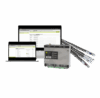
The OneTemp Wastewater Monitoring & Control Kit offers a practical, ready-to-integrate foundation for smarter wastewater management in Food & Beverage operations.
Key features:
- Customisable setup for up to 8 sensors, with options for pH, ORP, conductivity, and DO, all with built-in temperature sensing.
- Optional API functionality for seamless integration into existing control systems.
- Web-based monitoring system for real-time data access and control.
- Real-time monitoring and data logging for improved process visibility.
- Supports scalable expansion, allowing additional sensors (e.g. turbidity, flow) to be added as needed.
- IIoT-ready, helping operators and integrators implement more efficient monitoring systems.
By combining reliable measurement with flexible connectivity, the kit helps improve treatment consistency, support compliance goals, and lay the foundation for future Industry 4.0 upgrades.
Data-driven wastewater management is rapidly becoming the standard in Food and Beverage operations. Facilities adopting smart sensors and IIoT connectivity can expect:
- Greater regulatory confidence
- Optimised operations and energy usage
- Reduced environmental impact
Start monitoring smarter with OneTemp’s Wastewater Monitoring & Control Kit — improve efficiency, stay compliant, and reduce costs.